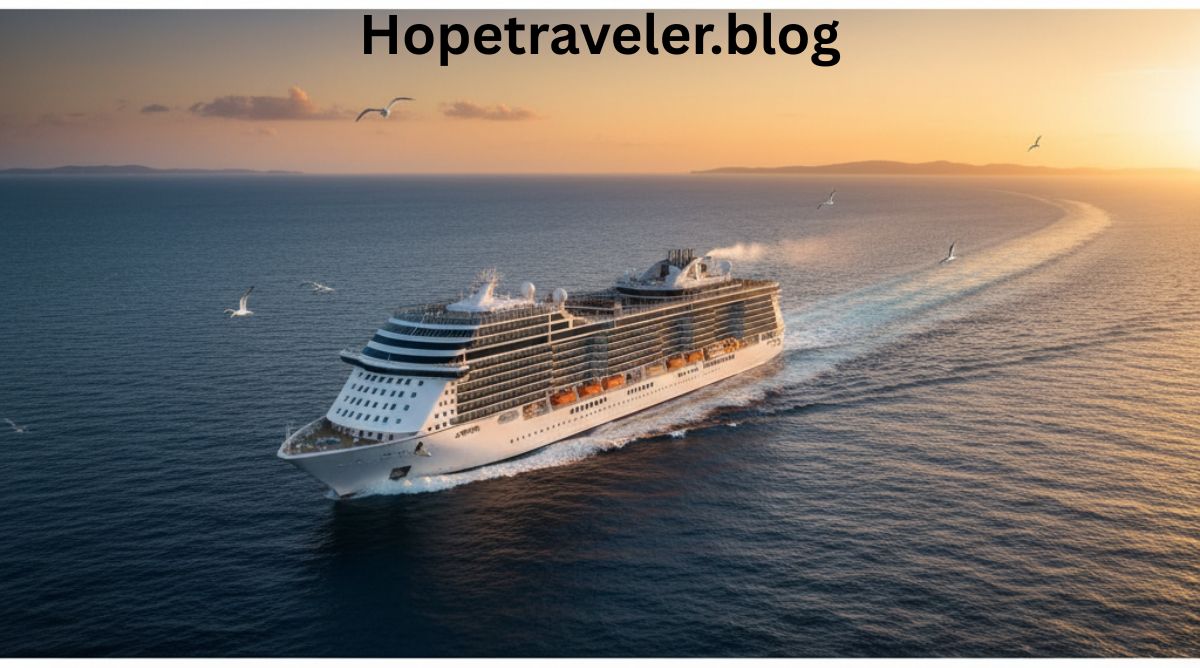
Cruise ships have always captured the imagination of travelers. These massive floating cities move gracefully across oceans, carrying thousands of passengers in comfort and luxury. But one question often comes to mind — how fast does a cruise ship travel?
At first glance, cruise ships appear to move slowly compared to airplanes or speedboats. However, when you consider their enormous size and the distances they cover, their speed is quite impressive. In this guide, we’ll explore how fast modern cruise ships travel, what affects their speed, and how that speed influences travel time and passenger experience.
What Is a Cruise Ship?
A Cruise ship is a large passenger vessel used mainly for leisure voyages, where the journey itself and the ship’s amenities are part of the experience. Unlike ferries, which primarily transport passengers from one place to another, cruise ships operate on round-trip itineraries that visit multiple destinations — often across continents.
Modern cruise ships are equipped with luxurious cabins, restaurants, theaters, pools, spas, and even theme parks. They are built for comfort and stability rather than speed.
Understanding Cruise Ship Speed: Knots vs. Miles per Hour
Before diving into the numbers, it’s important to understand how cruise ship speed is measured.
1. Knots
Cruise ship speeds are measured in knots, a nautical unit of speed used by all ships and aircraft.
- 1 knot = 1 nautical mile per hour = 1.15 miles per hour (mph)
So when a cruise ship travels at 20 knots, it’s moving at roughly 23 mph (37 km/h).
2. Nautical Miles
Nautical miles are used instead of regular miles because they correspond with the Earth’s latitude and longitude system — making navigation across oceans easier.
- 1 nautical mile = 1.15 miles (1.85 km)
Understanding these measurements helps travelers appreciate how cruise lines plan itineraries based on distances and travel times.
Average Speed of Cruise Ships
Most modern cruise ships travel at an average speed of 20 to 24 knots, which equals about 23 to 28 miles per hour (37–45 km/h).
This speed may seem modest, but remember that these vessels can weigh over 100,000 tons and carry more than 6,000 passengers. Maintaining stability, comfort, and fuel efficiency is far more important than sheer speed.
Here’s a general overview of cruise ship speed ranges:
| Cruise Ship Type | Average Speed (Knots) | Average Speed (MPH) |
|---|---|---|
| Small luxury cruise ships | 18–20 knots | 21–23 mph |
| Mid-size ocean liners | 21–23 knots | 24–26 mph |
| Large mega-ships | 22–24 knots | 25–28 mph |
| Fast cruise liners (like Queen Mary 2) | 28–30 knots | 32–35 mph |
The fastest cruise liners, such as RMS Queen Mary 2, can reach speeds of 30 knots (35 mph) — but these are exceptions rather than the rule.
Factors That Affect a Cruise Ship’s Speed
Several factors determine how fast a cruise ship can travel. These include design, engine power, weather, and fuel economy. Let’s explore the major ones.
1. Ship Design and Size
Larger ships are typically heavier and less aerodynamic in water, making them slightly slower. Modern mega-ships prioritize passenger comfort and stability over high speed.
2. Engine Type and Power
Cruise ships use massive diesel-electric engines that generate tens of thousands of horsepower. Some newer vessels use gas turbines or hybrid propulsion systems to balance speed with fuel efficiency.
3. Fuel Efficiency
Cruise lines aim to minimize fuel consumption, as fuel is one of the biggest operational expenses. Traveling at slightly lower speeds — around 18–20 knots — significantly reduces fuel costs.
4. Ocean Currents and Wind
Strong ocean currents or headwinds can slow a ship down, while favorable tailwinds or currents can help it move faster.
5. Weather Conditions
Rough seas, storms, or hurricanes can force a ship to reduce speed for safety reasons.
6. Port Schedules
Cruise itineraries are designed with precise timing. Ships often travel at moderate speeds to arrive at ports according to schedule, rather than as fast as possible.
How Speed Affects Cruise Travel Time
The ship’s speed directly impacts how long it takes to reach each destination. However, cruise lines rarely operate at top speed except in emergencies.
Here are a few travel time examples:
| Route | Distance (Nautical Miles) | Average Cruise Speed | Travel Time |
|---|---|---|---|
| Miami to Nassau, Bahamas | 185 | 20 knots | ~9 hours |
| Miami to Cozumel, Mexico | 550 | 22 knots | ~25 hours |
| Los Angeles to Hawaii | 2,500 | 22 knots | ~5 days |
| Southampton (UK) to New York | 3,100 | 24 knots | ~6 days |
As you can see, cruise vacations are designed to prioritize relaxation over speed. The slower pace allows passengers to enjoy amenities, onboard entertainment, and breathtaking sea views.
Fastest Cruise Ships in the World
Although most cruise ships maintain moderate speeds, a few exceptional vessels stand out for their power and performance.
1. RMS Queen Mary 2
- Top Speed: 30 knots (35 mph)
- Operator: Cunard Line
- Known as the fastest ocean liner in the world, Queen Mary 2 can cross the Atlantic Ocean in just five days.
2. Norwegian Bliss
- Top Speed: 25 knots (29 mph)
- Operator: Norwegian Cruise Line
- A modern ship with energy-efficient engines and excellent hydrodynamics.
3. Royal Caribbean’s Oasis-Class Ships
- Top Speed: 22 knots (25 mph)
- Includes ships like Symphony of the Seas and Wonder of the Seas.
These vessels demonstrate how technology and engineering continue to evolve to balance speed, comfort, and sustainability.
Why Cruise Ships Don’t Travel Faster
You might wonder why cruise ships don’t travel as fast as airplanes or smaller vessels. The reasons are both practical and economic.
1. Passenger Comfort
High speeds increase vibration and wave impact, leading to motion sickness and discomfort for passengers.
2. Fuel Consumption
Fuel usage increases exponentially with speed. Traveling 10% faster can use up to 30% more fuel — which is costly and environmentally damaging.
3. Port Schedules and Regulations
Cruise itineraries are precisely planned. Arriving too early at a port may require the ship to wait offshore until docking time.
4. Safety Concerns
Rough seas or shallow areas require reduced speeds for safety and navigation accuracy.
Environmental Considerations
Modern cruise lines face growing pressure to reduce carbon emissions. By maintaining moderate speeds (typically under 24 knots), they minimize both fuel consumption and pollution.
Some companies have adopted eco-friendly technologies such as:
- Liquefied Natural Gas (LNG) engines
- Hybrid propulsion systems
- Hull design optimizations to reduce drag
Traveling at slower speeds — known as “slow steaming” — is now a common strategy to improve fuel efficiency and environmental sustainability.
How Cruise Ship Speed Compares to Other Vessels
| Type of Vessel | Average Speed (Knots) | MPH Equivalent |
|---|---|---|
| Cargo ship | 18–22 | 21–25 |
| Cruise ship | 20–24 | 23–28 |
| Ferry | 25–35 | 29–40 |
| Speedboat | 40–70 | 46–80 |
| Airplane | 450–550 | 515–630 |
Cruise ships are slower than ferries or cargo ships because their primary goal is comfort, not logistics or speed.
Life Aboard at Cruise Ship Speeds
Even though the ship is constantly moving, passengers rarely feel the motion — thanks to stabilizers and modern engineering. The slow, steady pace also allows for:
- Smooth dining experiences
- Relaxed poolside activities
- Enjoyable deck walks without strong wind interference
In fact, many travelers report that the gentle movement of the ship enhances their overall vacation experience.
The Role of Technology in Cruise Ship Speed
Cruise ship design continues to advance. Naval architects are experimenting with:
- Advanced hull shapes for reduced drag
- Lightweight materials for improved fuel efficiency
- Dynamic positioning systems for better maneuverability
These innovations allow ships to maintain optimal cruising speeds without sacrificing comfort or safety.
Tips for Passengers Curious About Speed
If you’re fascinated by how fast your cruise ship travels, here’s how to learn more during your voyage:
- Visit the bridge tour (if available) — officers often explain navigation and speed systems.
- Check the ship’s information channel on your cabin TV — it usually displays live speed, location, and distance traveled.
- Ask the crew or captain during Q&A sessions about the ship’s maximum speed and performance.
Fun Facts About Cruise Ship Speeds
- The slowest cruises in the world are Antarctic expeditions, which travel around 10–12 knots to ensure safety near icebergs.
- The fastest recorded ocean liner, SS United States, reached an astonishing 38 knots (44 mph) in 1952.
- A cruise ship traveling at 22 knots can circle the globe in roughly 75 days, though no passenger cruises do this nonstop.
Conclusion
So, how fast does a cruise ship travel?
The average modern cruise ship moves at 20 to 24 knots (23 to 28 mph) — a speed that balances efficiency, safety, and comfort. While these massive vessels aren’t built for racing, their slow and steady pace ensures passengers can enjoy every moment of the journey.
From luxury liners like the Queen Mary 2 to eco-friendly modern ships, cruise travel continues to evolve — combining technology, sustainability, and relaxation in perfect harmony.
When you’re next aboard a cruise, remember: it’s not about how fast you get there, but how much you enjoy the voyage along the way.