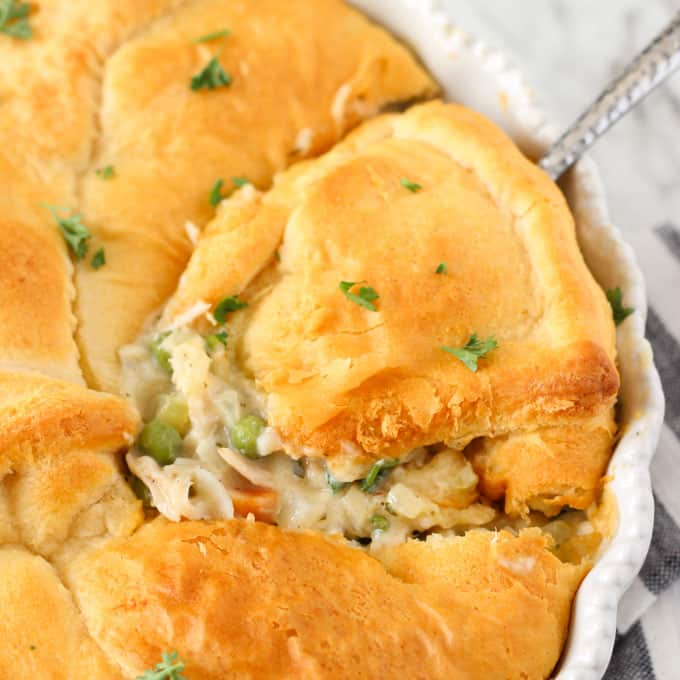
There’s something undeniably comforting about a warm, bubbling chicken pot pie fresh from the oven. The creamy filling, tender vegetables, and flaky crust come together to create a dish that feels like a hug on a plate. But let’s be honest—making traditional pie crust from scratch can be intimidating, especially on a busy weeknight.
That’s where crescent rolls come in. This clever shortcut transforms a classic comfort food into an accessible, weeknight-friendly meal without sacrificing any of that homemade goodness. The buttery, flaky layers of crescent roll dough create a golden, crispy topping that rivals any from-scratch crust, and the best part? You can have this dish on the table in under an hour.
Whether you’re feeding a hungry family, meal prepping for the week, or simply craving something warm and satisfying, this chicken pot pie made with crescent rolls delivers on flavor, texture, and convenience.
If you love cozy homemade recipes like this, I share more family-style comfort meals on my site razablogger.com — it’s my little corner of the internet where I post only real food and beginner-friendly cooking.
Let’s explore why this dish has become a beloved staple in kitchens everywhere and how you can make it your own.
The Story Behind Chicken Pot Pie
Chicken pot pie has been warming hearts and bellies for centuries. The concept of encasing savory fillings in pastry dates back to ancient Rome, where cooks would bake meats in a flour-and-oil crust called “a coffyn.” These early versions were more about preserving the filling than creating a delicious crust.
The dish evolved through medieval Europe, where elaborate meat pies became symbols of wealth and culinary skill. When European settlers brought their recipes to America, chicken pot pie adapted to local ingredients and preferences. By the 19th century, it had become a quintessential American comfort food, with regional variations appearing across the country.
The frozen TV dinner version popularized in the 1950s introduced millions to this classic dish, though home cooks have always known that nothing beats a pot pie made from scratch. Our version honors this tradition while embracing modern convenience—a perfect example of how classic recipes can evolve to fit contemporary lifestyles.
Why Crescent Rolls Are a Game-Changer
Using crescent rolls instead of traditional pie crust offers several compelling advantages that make this recipe accessible to cooks of all skill levels.
Time Savings: Making pie crust from scratch requires mixing, chilling, rolling, and careful handling. Crescent rolls eliminate these steps entirely. Simply unroll, arrange, and bake. This cuts your prep time significantly, making homemade pot pie possible even on hectic weeknights.
Foolproof Results: Pie crust can be temperamental. Too much handling creates a tough crust, while too little moisture makes it crumbly. Crescent rolls remove the guesswork. The pre-made dough delivers consistent, flaky results every time, building confidence for novice cooks.
Buttery Flavor and Texture: The laminated layers of crescent roll dough create an incredibly flaky, buttery topping that complements the creamy filling beautifully. As the dough bakes, those layers separate and puff, creating a golden crown that’s both visually appealing and delicious.
Versatility: Crescent rolls adapt well to customization. Brush them with garlic butter, sprinkle with herbs, or add a parmesan crust for extra flavor. This flexibility lets you personalize your pot pie to match your taste preferences.
Accessibility: Crescent roll dough is widely available, affordable, and requires no special equipment or skills. This democratizes comfort food, making it achievable for anyone with an oven and a casserole dish.
What You’ll Need
Main Ingredients
For the Filling:
- 3 cups cooked chicken, diced (rotisserie chicken works great)
- 2 cups mixed vegetables (carrots, peas, green beans, corn)
- 1/3 cup butter
- 1/3 cup all-purpose flour
- 1/2 teaspoon salt
- 1/4 teaspoon black pepper
- 1/4 teaspoon garlic powder
- 1/4 teaspoon onion powder
- 1 3/4 cups chicken broth
- 2/3 cup whole milk
For the Topping:
- 1 can (8 oz) refrigerated crescent roll dough
- 1 tablespoon melted butter (optional, for brushing)
- Fresh herbs for garnish (optional)
Equipment Needed
- 9×13 inch baking dish
- Large saucepan or skillet
- Whisk
- Measuring cups and spoons
- Cutting board and knife
How to Make It
Step 1: Prepare Your Ingredients
Preheat your oven to 375°F (190°C). If you’re using raw chicken, cook it now by poaching, grilling, or baking until it reaches 165°F internally, then dice it into bite-sized pieces. For convenience, grab a rotisserie chicken from your grocery store and shred the meat—this saves significant time without compromising flavor.
Prepare your vegetables by dicing them into uniform, bite-sized pieces. Fresh or frozen vegetables both work well. If using frozen, there’s no need to thaw them first.
Step 2: Create the Creamy Base
This is where the magic happens. In a large saucepan over medium heat, melt the butter. Once it’s bubbling gently, add the flour and whisk continuously for about one minute. This creates a roux, which will thicken your filling and give it that signature creamy texture.
The roux should be pale golden and smell slightly nutty—avoid browning it too much. Add your salt, pepper, garlic powder, and onion powder, whisking to combine. These seasonings build the flavor foundation of your filling.
Step 3: Build the Filling
Gradually pour in the chicken broth while whisking constantly. This prevents lumps from forming. The mixture will start thin but will thicken as it heats. Add the milk and continue whisking until the sauce is smooth and has thickened to coat the back of a spoon—this usually takes 3-4 minutes.
Stir in your diced chicken and vegetables. Mix everything thoroughly so each piece is coated in that luscious, creamy sauce. Taste and adjust seasonings if needed. Some prefer more pepper for a bit of kick, while others might add a pinch of thyme or poultry seasoning.
Step 4: Assemble Your Pot Pie
Pour the filling into your greased 9×13 inch baking dish, spreading it evenly. The mixture should be hot when it goes into the dish—this helps the crescent rolls bake properly on top.
Unroll your crescent roll dough but don’t separate it into triangles. Instead, press the perforations together to create one solid sheet. Carefully lay this sheet over your filling, tucking the edges down around the sides of the dish. If you’d like a golden, glossy finish, brush the top with melted butter.
Step 5: Bake to Golden Perfection
Place your assembled pot pie on the center rack of your preheated oven. Bake for 20-25 minutes, until the crescent roll topping is deep golden brown and the filling is bubbling around the edges.
If you notice the crust browning too quickly, tent it loosely with aluminum foil for the remaining baking time. The filling should be hot all the way through, and the crescent rolls should be fully cooked—no doughy centers.
Step 6: Rest and Serve
Remove your pot pie from the oven and let it rest for 5-10 minutes before serving. This allows the filling to thicken slightly, making it easier to serve neat portions. Garnish with fresh chopped parsley or thyme if desired.
Tips for Success
Make It Your Own: This recipe is wonderfully adaptable. Try adding mushrooms, celery, or potatoes to the filling. Swap chicken for turkey after Thanksgiving, or use a combination of proteins. For extra richness, stir in a splash of heavy cream or a spoonful of cream cheese.
Storage Solutions: Leftovers keep well in an airtight container in the refrigerator for up to 4 days. Reheat individual portions in the microwave or warm the entire dish in a 350°F oven until heated through. The crescent rolls may soften slightly but will still taste delicious.
Freezer-Friendly Option: You can freeze the filling separately from the crescent roll topping. Prepare the filling, let it cool completely, then freeze in a freezer-safe container for up to 3 months. When ready to eat, thaw overnight in the refrigerator, transfer to a baking dish, top with fresh crescent rolls, and bake as directed.
Dietary Adaptations: For a gluten-free version, use gluten-free flour for the roux and gluten-free crescent roll dough. To make it dairy-free, substitute butter with olive oil or vegan butter, and use unsweetened almond milk or oat milk instead of dairy milk.
Boost the Flavor: Add a teaspoon of Dijon mustard to the filling for depth, or stir in fresh herbs like rosemary, thyme, or sage. A splash of white wine added to the roux (before the broth) adds restaurant-quality flavor.
Individual Servings: Divide the filling among ramekins and top each with a portion of crescent roll dough for personal-sized pot pies. These are perfect for portion control or entertaining guests.
Nutritional Breakdown
Per serving (based on 8 servings):
- Calories: 340
- Total Fat: 18g
- Saturated Fat: 8g
- Cholesterol: 75mg
- Sodium: 680mg
- Total Carbohydrates: 24g
- Dietary Fiber: 2g
- Sugars: 4g
- Protein: 22g
This dish provides a good balance of protein from the chicken, vitamins from the vegetables, and energy from the carbohydrates. To lighten it up, use low-fat milk, reduce the butter, or increase the ratio of vegetables to chicken.
Frequently Asked Questions
Can I use biscuit dough instead of crescent rolls?
Absolutely! Biscuit dough creates a thicker, more substantial topping. You can use canned biscuits, either keeping them whole and arranging them on top, or rolling them out into a single layer like you would with crescent rolls.
What’s the best way to use leftover chicken?
This recipe is perfect for leftover rotisserie chicken, Thanksgiving turkey, or any cooked poultry. You can also use canned chicken in a pinch, though fresh or rotisserie offers better flavor and texture.
How do I prevent a soggy bottom crust?
Since this recipe uses crescent rolls only on top, you won’t have a soggy bottom to worry about. However, if you want to add a bottom layer of crescent rolls, pre-bake it for 5-7 minutes before adding the filling to help it stay crisp.
Can I prep this ahead of time?
Yes! Prepare the filling up to 24 hours in advance and store it covered in the refrigerator. When ready to bake, reheat the filling until warm, transfer to your baking dish, add the crescent roll topping, and bake as directed.
What sides pair well with chicken pot pie?
Keep it simple with a crisp green salad, roasted Brussels sprouts, or steamed green beans. The pot pie is hearty enough to be the star of the meal, so light, fresh sides balance it perfectly.
Bring This Recipe to Your Table
Chicken pot pie with crescent rolls proves that comfort food doesn’t have to be complicated. This recipe delivers all the warmth and satisfaction of traditional pot pie while respecting your time and skill level. The buttery, flaky crescent roll topping crowns a rich, creamy filling studded with tender chicken and vegetables—it’s the kind of meal that brings everyone to the table.
The beauty of this dish lies in its adaptability. Make it exactly as written for classic comfort, or customize it with your favorite vegetables, proteins, and seasonings. Either way, you’ll have a satisfying meal that tastes like you spent hours in the kitchen, even though you didn’t.
Ready to rediscover your kitchen? Grab those crescent rolls and let’s get cooking. Your family will be asking for seconds before you know it.