When most people ponder the world’s historically iconic destinations, Egypt is at or near the top of discussion. And for good reason. There are few places on Earth as well-trodden by the footprints of 5,000 years of uninterrupted civilization as Egypt. From huge pyramids emerging from the golden sands of the desert to towering temples carved right into the rocky mountain walls, Egypt’s tourist attractions are hard to beat when it comes to glimpses into an ancient world. And if you are a student studying ancient civilizations or a history buff, you will find that Egypt has something to make chills run down your spine.
Why Egypt Stands Out Among the Landmarks of History
The vast majority of historic sites afford a view of one time or one culture. Egypt is different. It packs civilization upon civilization, pharaonic, Greco-Roman, Coptic Christian, Byzantine and Islamic, into a territory that is 35 percent desert yet supports 96.5 million people.
Strolling around Cairo, you might be in a medieval Islamic bazaar one moment and visit a Coptic church from the 3rd century the next, then drive for thirty minutes to stand at the foot of something that was old when those were new. But it is the density of history that makes Egypt tourist attractions truly without parallel in the world.
The Pyramids of Giza: The Jewel in the Crown of Egypt Tourist Attractions
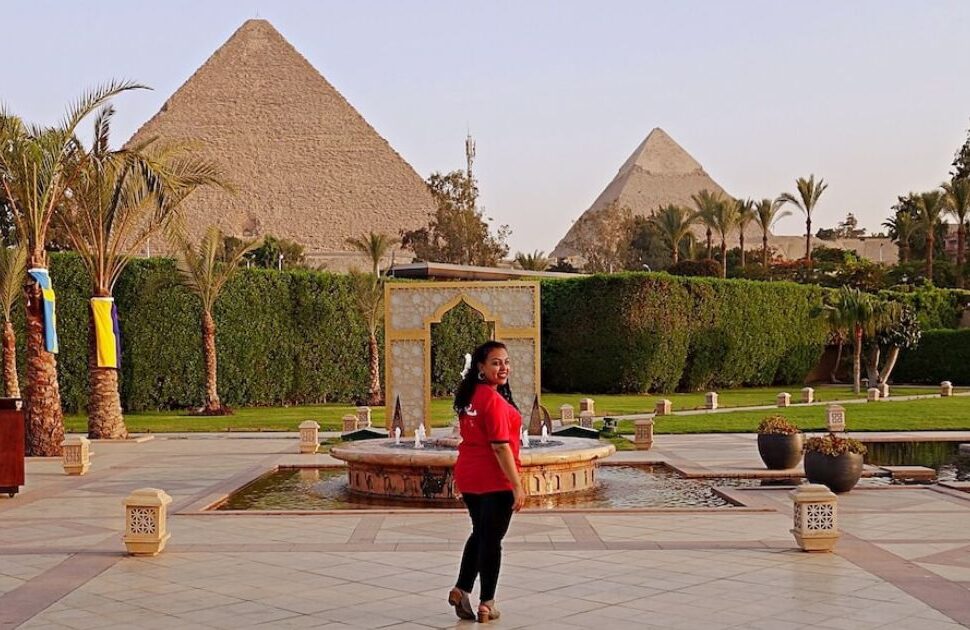
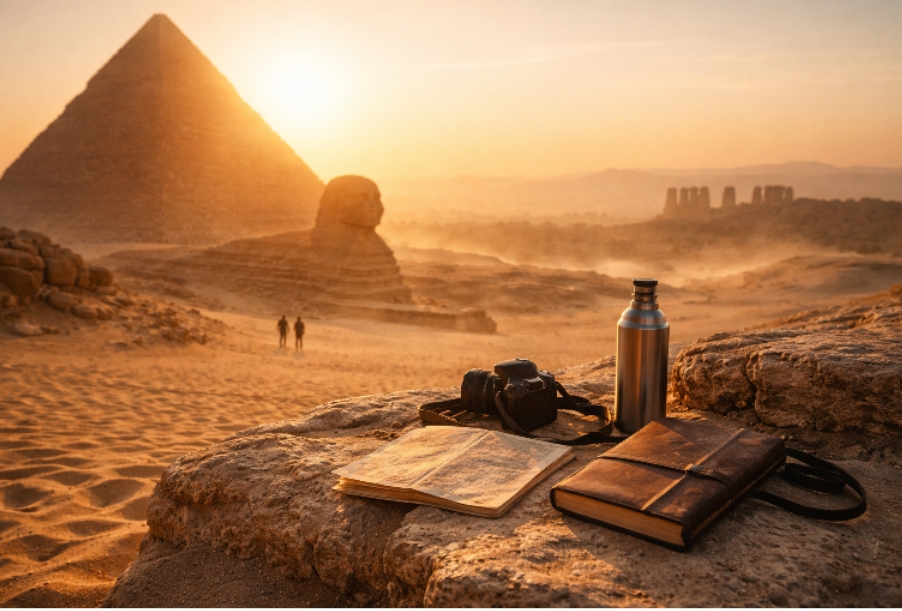
No such list can be without including Pyramids of Giza. The giant structures that were constructed as tombs for pharaohs Khufu, Khafre and Menkaure are now over 4,500 years old. The earliest of the Seven Wonders of the Ancient World, and the only one to remain largely intact, stands 138 meters high.
You stand at its foot and look up, you feel something that photographs just can’t convey: an enormous sense of human ambition coupled with engineering brilliance.
The Great Sphinx of Giza
Closeby, the Great Sphinx of Giza watches over the plateau with a lion’s body and human face which is thought to depict Pharaoh Khafre. Its origin and function remain points of debate among archaeologists, who regard it as one of the most enigmatic megalithic monuments in Britain.
Luxor: Egypt’s Open-Air Museum
If the Pyramids are Egypt’s throne, then Luxor is its glory. Luxor, which sits on the Nile in Upper Egypt, was known in ancient times as the city of Thebes, a capital of pharaohs who ruled during the New Kingdom. Today, some of the most awe-inspiring Egypt tourist attractions on the face of the earth are housed there.
Karnak Temple Complex
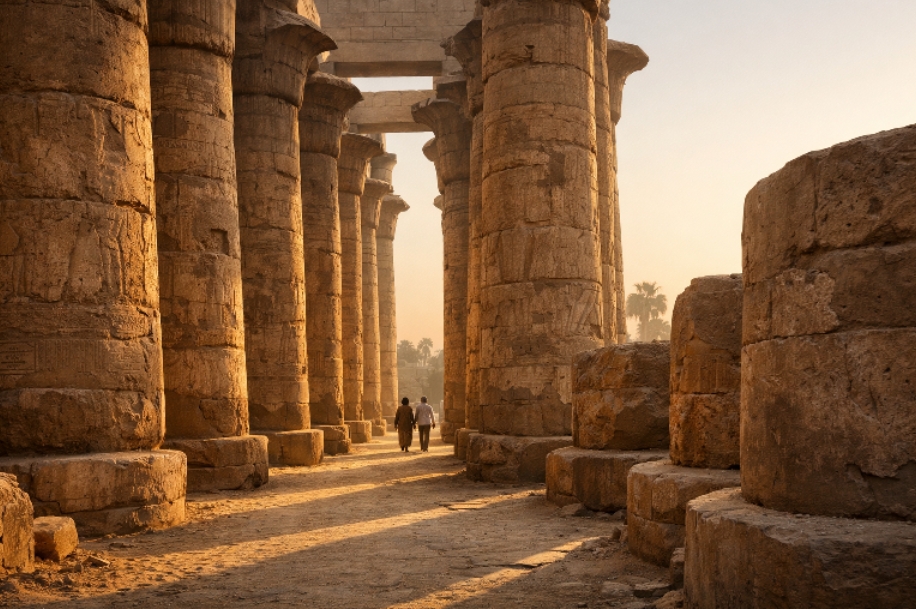
It is perhaps the “most” religious complex ever built. Constructed over some 2,000 years by a succession of pharaohs, it spreads across more than 100 hectares and includes the iconic Hypostyle Hall, a forest of 134 towering columns each up to 21 meters high.
To walk through Karnak at dawn when the sun is coming up and the light is slipping through the columns, and the crowds are still manageable, that’s a very profound experience.
The Valley of the Kings
Opposite Luxor, on the other side of the Nile, lies the Valley of the Kings, burial grounds of Egypt’s mightiest New Kingdom pharaohs, including Ramesses the second, but most famously Tutankhamun.
The “discovery of the century” took place in 1922, when Howard Carter unearthed Tutankhamun’s nearly untouched tomb, sowing down a little bit of archaeology’s greatest treasures. The Valley of the Kings is not a trips tale; it’s a tale about mortality, power, and the Egyptians’ eternal life fantasies.
Abu Simbel: A Monument to Pharaohs’ Greatness
Few sites in Egypt evoke as much astonishment as Abu Simbel. Situated on the sides of a sandstone cliff of Ramesses the second in around 1264 BC; the two temples of Abu Simbel feature unbelievably massive seated pharaohs-statues, each of which is 20 meters tall.
What’s much extraordinary about this spot is how it turned from Egypt’s most famous landmark into an international cooperation institution. The Aswan High Dam started raising waters in the 1960s, so the temples were moved here, otherwise underwater, to high ground.
Cairo’s Egyptian Museum: History Indoors
Egypt’s most well-known attractions are obelisks. However, not all grand exhibits are staged under the open sky. The Egyptian Museum in Tahrir square keeps over 120,000 ancient Egypt artifacts, one of the most substantial ancient Egypt collections globally, including Tutankhamun’s death mask.
If you have dreamed of jungling the centuries’ central tourist attraction into one day, a couple of hours at this museum will seem 100% a dream come true.
Islamic Cairo and the Citadel: Layers Behind the Pharaohs
And Egypt is so much more than its millions of years of history. Islamic Cairo, a UNESCO World Heritage Site, is home to the world’s largest concentration of medieval Islamic monuments.
One of them is the impressive 12th-century Citadel of Saladin, which looms large over Cairo and plays host to the beautiful Muhammad Ali Mosque. These landmarks serve as a reminder that Egypt’s story did not end with the pharaohs, but rather marched on in chapter after extraordinary chapter.
Final Thoughts
Being an Egypt tourist attraction isn’t just something to tick off on your list of world travel destinations. It’s a meeting with the cradle of human civilization. From the mathematical precision of the pyramids to narrative art on temple walls, every corner of Egypt speaks a story that is still being translated.
For visitors after depth, wonder and real engagement with history, Egypt is one of the most rewarding travel destinations on earth. Careful planning, reverence for the site and a little humility in the face of what humanity could accomplish thousands of years ago.
FAQs
What are the top attractions to visit in Egypt?
The Giza pyramid complex is Egypt’s most visited site; more than 14.7 million tourists from all over the world visited Egypt in 2010, which was a 17% increase from the previous year.
Is Egypt safe for tourists?
While popular tourist destinations such as Cairo, Luxor, Aswan and Sharm El Sheikh are deemed safe, the situation can become volatile in other parts of the country. It’s always wise to check your government’s latest travel advisory before planning a visit.
When is the best time to see Egypt’s ancient sites?
Typically the best time to travel is between October and April when it’s cooler and more conducive to outdoor exploration.
How many days would you need to hit up Egypt’s top historical sights?
With a well-paced 10- to 14-day trip, you will be able see Cairo, Luxor, Aswan and Abu Simbel without running the marathon.