Located along the scenic Pilbara coastline, Port Hedland in Western Australia is one of the country’s most fascinating and economically significant destinations. Known for its massive export operations, rich Indigenous heritage, and rugged natural beauty, Port Hedland perfectly balances industrial power with the charm of remote coastal living.
As one of the world’s largest iron ore export ports, this town plays a vital role in powering Australia’s economy. Yet beyond the mines and ships lies a community full of character, history, and adventure — a place where red earth meets turquoise seas, and modern industry coexists with ancient landscapes.
In this comprehensive guide, we’ll explore everything you need to know about Port Hedland, from its location and economy to attractions, lifestyle, and travel tips — making it the ultimate resource for anyone planning to visit or learn about this iconic Western Australian town.
Introduction to Port Hedland
Port Hedland is located in the Pilbara region of northwestern Australia, approximately 1,650 kilometers north of Perth. It is Western Australia’s largest port and one of the busiest bulk export hubs in the world.
The town is divided into two main areas:
- Port Hedland (the original port town) — where the harbor, industrial facilities, and old residential areas are located.
- South Hedland — a more modern, residential district designed to accommodate the town’s growing population.
Port Hedland’s unique geography features expansive tidal flats, mangroves, and sandy beaches. The surrounding region is characterized by its iconic red soil, desert climate, and vast mining landscapes.
Despite its reputation as a mining town, Port Hedland offers more than just iron ore. It’s a place of contrasts — where working ports meet vibrant local communities, and where travelers can experience both the harshness and the beauty of outback Australia.
A Brief History of Port Hedland
Indigenous Heritage
Before European settlement, the area was inhabited by the Kariyarra people, whose presence in the Pilbara region dates back tens of thousands of years. The Kariyarra people continue to have a strong cultural and spiritual connection to the land and sea, with many sacred sites still recognized today.
European Discovery and Settlement
The town was named after Captain Peter Hedland, a mariner who explored the Pilbara coastline in 1863. European settlers established Port Hedland as a small port to serve the pastoral industry, but it wasn’t until the 1960s that the region transformed into a mining powerhouse.
Rise of the Iron Ore Industry
The discovery of rich iron ore deposits in the Pilbara changed Port Hedland’s destiny. In the 1960s, companies like BHP (then Broken Hill Proprietary) developed massive mining and shipping operations, exporting millions of tonnes of ore to global markets.
This boom led to the construction of deep-water berths, rail links, and housing developments — turning Port Hedland from a sleepy harbor into an industrial hub.
Today, the port exports more than 500 million tonnes of iron ore annually, making it a cornerstone of Australia’s mining economy.
Location and Climate
Geographical Position
Port Hedland lies on the northwestern coast of Western Australia, between Karratha and Broome. It sits on a naturally deep harbor within the Indian Ocean, providing an ideal location for large-scale maritime operations.
Climate
The town experiences a tropical semi-arid climate, characterized by:
- Hot summers: Temperatures often exceed 40°C (104°F).
- Mild winters: Average highs around 28°C (82°F).
- Wet season: From December to March, with occasional cyclones and heavy rainfall.
Because of its climate, the best time to visit Port Hedland is between April and September, when the weather is warm but comfortable and the skies are mostly clear.
Economy and Industry
Port Hedland’s economy is dominated by mining, shipping, and logistics. The port handles the export of iron ore from major mining companies like BHP, Fortescue Metals Group, and Roy Hill.
Key Economic Drivers:
- Iron Ore Export – The world’s largest bulk export port, handling over half a billion tonnes annually.
- Salt Production – The nearby Dampier Salt operations produce high-quality sea salt for export.
- Maritime Services – Tugboats, pilotage, and shipping logistics support the enormous port operations.
- Construction and Engineering – Ongoing infrastructure development provides jobs and business opportunities.
- Tourism – A smaller but growing sector, driven by cultural tourism, fishing, and adventure travel.
Despite being an industrial town, Port Hedland’s economic impact stretches far beyond the Pilbara — contributing billions to Australia’s GDP each year.
Attractions and Things to Do in Port Hedland
While the town is often associated with industry, there are plenty of activities for visitors interested in culture, history, and nature.
1. The Port Itself
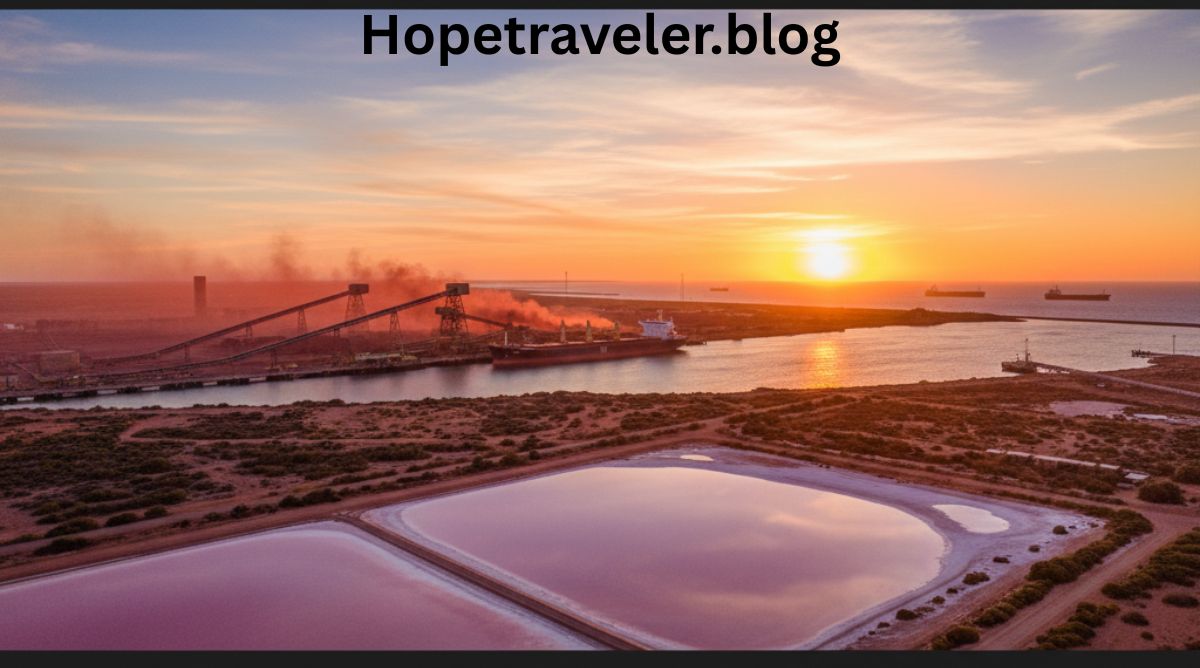
The working port is one of the most fascinating sights in Port Hedland. From public viewing areas like Marapikurrinya Park, visitors can watch giant ore carriers being loaded and guided out to sea. The scale of operations is breathtaking, especially at sunset when ships reflect the fiery Pilbara sky.
2. Port Hedland Heritage Trail
Explore the town’s history through self-guided walks featuring landmarks such as:
- The Dalgety House Museum, showcasing early settler life.
- The Courthouse Gallery+Studio, displaying local art and craft.
- The West End district, known for its historic buildings and seaside charm.
3. Cooke Point and Cemetery Beach
For those who enjoy the coast, these beaches are ideal for sunset viewing, beachcombing, and turtle watching (especially between October and March, when flatback turtles nest).
4. Spinifex Hill Studios
A must-visit for art lovers, this Indigenous art centre showcases works by Aboriginal artists from across the Pilbara region. The colorful, abstract pieces reflect the land’s natural beauty and cultural stories.
5. Don Rhodes Mining and Transport Museum
This open-air museum displays mining equipment and historical artifacts, offering insight into the region’s industrial development.
6. Local Events and Festivals
Port Hedland hosts several community events each year, including:
- North West Festival: A celebration of live music and Pilbara culture.
- Port Hedland Cup: A major horse racing event.
- Community Markets: Featuring local produce, crafts, and food.
Nature and Wildlife
Despite its industrial side, Port Hedland is surrounded by spectacular natural landscapes.
Flora and Fauna
The region’s dry climate supports unique vegetation such as spinifex grasses and acacia shrubs. You can also encounter wildlife like kangaroos, emus, and migratory birds.
Marine Life
The coastal waters around Port Hedland are home to turtles, dugongs, dolphins, and a variety of fish species. Turtle nesting season (October–March) is a particularly special time for nature enthusiasts.
Staircase to the Moon
One of the most famous natural phenomena in the northwest, this optical illusion occurs when a full moon reflects on tidal mudflats, creating the appearance of a staircase rising to the moon. It can be seen from Cooke Point several times a year.
Accommodation in Port Hedland
Port Hedland offers a range of accommodation options suitable for all types of travelers — from business visitors to tourists.
1. Hotels and Motels
- The Esplanade Hotel: Located in the West End, offering modern rooms and a popular bar/restaurant.
- Hospitality Port Hedland: A comfortable mid-range hotel with ocean views.
2. Serviced Apartments and Lodges
For longer stays, options like Mia Mia Executive Apartments and The Landing Resort offer self-contained accommodation with kitchen facilities.
3. Caravan Parks and Budget Lodging
Backpackers and road-trippers can stay at Discovery Parks Port Hedland or Blackrock Tourist Park, both offering cabins and powered sites.
Getting to Port Hedland
By Air
Port Hedland International Airport (PHE) offers regular flights from:
- Perth (2-hour flight) via Qantas or Virgin Australia.
- Seasonal flights to Bali and other regional destinations.
By Road
- From Perth: Approximately 17 hours by car via the Great Northern Highway.
- From Broome: About 6 hours’ drive west.
The long drives across the Pilbara are popular among road-trippers who enjoy Australia’s vast open landscapes.
By Sea
Although mainly a commercial port, cruise ships occasionally visit as part of Pilbara coastal itineraries.
Living in Port Hedland
For those considering relocating, Port Hedland offers a unique lifestyle shaped by community spirit and outdoor living.
Education
The town has several public and private schools, as well as a North Regional TAFE campus for vocational training.
Healthcare
Hedland Health Campus provides hospital services, with additional medical clinics and pharmacies in South Hedland.
Community and Culture
The diverse population includes workers from across Australia and the world, creating a multicultural atmosphere. Regular community events and local markets strengthen this sense of connection.
Future Developments and Opportunities
Port Hedland continues to expand its port infrastructure to meet global demand. Projects include:
- Port expansion plans to increase export capacity.
- Renewable energy initiatives such as solar farms and hydrogen projects.
- Tourism development, including coastal beautification and eco-lodging.
The local government’s long-term vision aims to balance industrial growth with community wellbeing and environmental sustainability.
Travel Tips for Visitors
- Best Time to Visit: April to September (dry season).
- Stay Hydrated: The Pilbara heat can be extreme, so always carry water.
- Respect Indigenous Culture: Many nearby areas are sacred — visit respectfully.
- Book Accommodation Early: Rooms can fill quickly during mining or tourist seasons.
- Don’t Miss the Sunset: The orange skies over the port are unforgettable.
Why Visit Port Hedland?
Port Hedland offers travelers something truly unique — a raw, unfiltered look at Australia’s industrial might combined with the serenity of coastal wilderness. It’s a place where:
- You can witness the power of global trade firsthand.
- Learn about Indigenous culture and heritage.
- Explore nature in its most authentic form.
- Experience small-town camaraderie in the heart of the outback.
Whether you’re visiting for work, exploration, or curiosity, Port Hedland delivers an experience that’s both educational and inspiring.
Conclusion
Port Hedland, Western Australia, is more than just a mining port — it’s a living, breathing example of how human ambition and natural beauty can coexist. With its massive export operations, rich cultural heritage, and stunning landscapes, it captures the essence of Australia’s Pilbara spirit.
From sunrise over red dunes to sunsets over giant ships, Port Hedland tells the story of resilience, opportunity, and the connection between people and the land. Whether you’re a traveler, a worker, or a history enthusiast, a visit to Port Hedland is an unforgettable journey through one of the most extraordinary corners of Australia.