When we talk about firearms and their capabilities, one of the most intriguing and frequently asked questions is: how far does a bullet travel? The answer depends on a variety of factors — the type of gun, bullet design, firing angle, air resistance, and even weather conditions. Understanding bullet travel distance is not only important for ballistics enthusiasts and hunters but also for maintaining safety and awareness of how dangerous stray bullets can be.
This article explores the science behind bullet trajectory, the distance different firearms can achieve, and the various factors that influence how far a bullet can travel.
Understanding Bullet Trajectory
To understand how far a bullet travels, we must first grasp the concept of bullet trajectory — the curved path that a bullet follows after being fired.
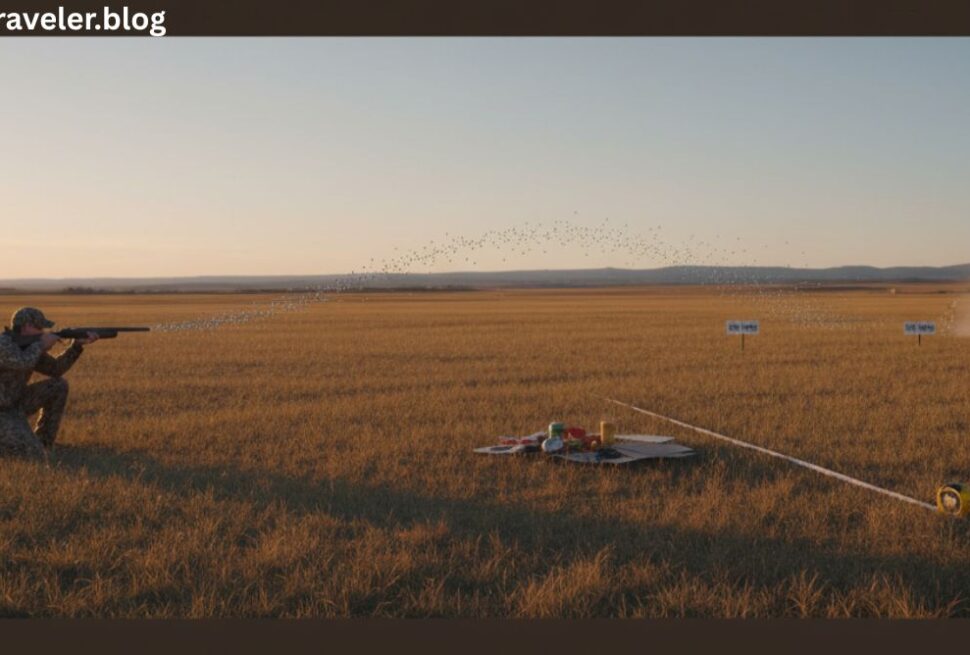
When a bullet leaves the gun barrel, it’s propelled by expanding gases from burning gunpowder. As it moves through the air, it’s influenced by gravity, air resistance, and wind. Initially, the bullet rises slightly (depending on the angle of the barrel) and then gradually drops until it hits the ground or another object.
For a detailed overview of how projectiles move through the air, you can visit the Ballistics page on Wikipedia.
Key Factors That Affect How Far a Bullet Travels
Several elements determine how far a bullet can go before stopping. Let’s break them down:
1. Muzzle Velocity
The muzzle velocity is the speed of a bullet as it leaves the gun barrel, usually measured in feet per second (fps) or meters per second (m/s). A higher muzzle velocity means the bullet travels faster and farther.
For example:
- A handgun bullet might leave the barrel at 900–1,200 fps.
- A rifle bullet can exceed 2,500–4,000 fps.
2. Bullet Type and Shape
The design and weight of a bullet significantly impact its flight. Pointed (spitzer) bullets are more aerodynamic and travel farther than round-nosed or flat bullets. Heavier bullets maintain momentum longer, but lighter bullets may travel faster initially.
3. Caliber
The caliber, or diameter of the bullet, also influences distance. Smaller-caliber bullets, like a .22 LR, may not go as far as high-powered rifle rounds like .308 Winchester or .50 BMG.
4. Angle of Fire
One of the most critical factors is the angle at which the gun is fired. Firing straight ahead (0 degrees) keeps the bullet low and fast, while firing at an upward angle (around 30–35 degrees) allows the bullet to travel much farther before gravity pulls it back to earth.
5. Environmental Conditions
Air resistance, humidity, altitude, and wind speed all affect how far a bullet goes. At higher altitudes, the air is thinner, so bullets can travel farther due to less drag.
How Far Can Common Bullets Travel?
Let’s look at the approximate maximum range of different types of bullets under ideal conditions. These distances assume the bullet is fired at the most effective angle for distance, not for accuracy.
1. .22 Long Rifle (LR)
The .22 LR is one of the most common small-caliber bullets used in target shooting and small-game hunting.
- Maximum Range: ~1.5 miles (2.4 kilometers)
- Effective Range: ~150 yards (137 meters)
Despite its small size, a .22 bullet can still be lethal over a mile away if fired into the air.
2. 9mm Pistol
A 9mm bullet is the standard round for handguns used by police and civilians worldwide.
- Maximum Range: ~2,300 yards (2.1 kilometers)
- Effective Range: ~50–100 yards (45–90 meters)
Because handguns are usually fired horizontally, their bullets don’t often reach maximum range, but they can still travel far enough to be dangerous.
3. .223 / 5.56 NATO (Rifle Round)
Used in AR-15 and M16 rifles, this round is lightweight and extremely fast.
- Maximum Range: ~3,800 yards (3.5 kilometers)
- Effective Range: ~500–600 yards (450–550 meters)
The bullet’s aerodynamic shape allows it to travel several miles if fired upward.
4. .308 Winchester
Popular for hunting and military use, this bullet is powerful and maintains energy over long distances.
- Maximum Range: ~5,000 yards (4.5 kilometers)
- Effective Range: ~800–1,000 yards (730–900 meters)
5. .50 BMG
One of the most powerful and longest-range bullets ever made, used in sniper and heavy machine guns.
- Maximum Range: ~7,000 yards (6.4 kilometers)
- Effective Range: ~1,800 yards (1.6 kilometers)
The .50 BMG can travel over 4 miles, making it one of the farthest-reaching bullets in existence.
For more details about this type of ammunition, see the Cartridge (firearms) Wikipedia page.
Real-World Scenarios: How Far Bullets Actually Travel
Although bullets can travel several miles under perfect conditions, in real life, they often don’t reach those distances. Here’s why:
- Most guns are fired horizontally, not at a high angle.
- Bullets lose velocity rapidly due to air drag.
- Obstacles like trees, buildings, and terrain stop the bullet before it reaches its full range.
However, bullets fired into the air can remain deadly. According to studies, falling bullets from celebratory gunfire can still reach speeds of over 300 feet per second (91 m/s), enough to penetrate skin or cause fatal injuries.
You can learn more about bullet flight and safety considerations on the Firearm safety Wikipedia page.
Bullet Travel Safety: Why Distance Matters
Understanding bullet travel isn’t just about curiosity — it’s a matter of safety. Accidental shootings and property damage often occur because people underestimate how far bullets can go.
Some key safety takeaways:
- Never shoot into the air. Bullets fired upward must come down, and they can cause injuries even miles away.
- Be sure of your target and what’s beyond it. If you’re shooting outdoors, ensure there’s a safe backstop (like a dirt berm or hill).
- Avoid shooting in residential areas. Even low-caliber bullets like the .22 LR can travel over a mile, potentially hitting unintended targets.
For guidelines on safe gun handling, you can refer to the Gun safety article on Wikipedia.
The Role of Gravity and Air Resistance
Physics plays a major role in determining bullet distance. Gravity constantly pulls the bullet downward, while air resistance slows it forward. The balance between these two forces creates the bullet’s parabolic arc.
If there were no gravity or air resistance, bullets would theoretically travel forever in a straight line. But in reality, the combination of drag and weight ensures that every bullet eventually falls to the ground.
To explore this further, check out Projectile motion on Wikipedia for the physics behind how objects move through the air.
Myth vs. Reality: Common Misconceptions About Bullet Distance
Let’s clear up some myths:
- Myth 1: “Bullets drop straight down after a few hundred yards.”
- Reality: Even small bullets can travel over a mile if fired at the right angle.
- Myth 2: “Bullets lose all power after they hit something.”
- Reality: Bullets can ricochet off surfaces and continue traveling unpredictably, though with reduced speed.
- Myth 3: “Handguns aren’t dangerous from far away.”
- Reality: A 9mm bullet can still be lethal over half a mile if fired properly.
Conclusion
So, how far does a bullet travel?
The answer varies depending on the firearm, bullet type, and conditions, but in general:
- Handguns: up to 1–2 miles
- Rifles: up to 3–5 miles
- High-caliber sniper rounds: up to 4–7 miles
Even the smallest bullet can travel far enough to cause harm or death. Understanding this helps promote responsible gun use and safety awareness.
Whether you’re a hunter, marksman, or simply curious about firearms, always remember that bullets don’t just stop where you expect — they keep going until gravity and drag bring them down.
By respecting the science of ballistics and following proper safety rules, we can ensure that shooting remains a controlled, educational, and safe activity for everyone.