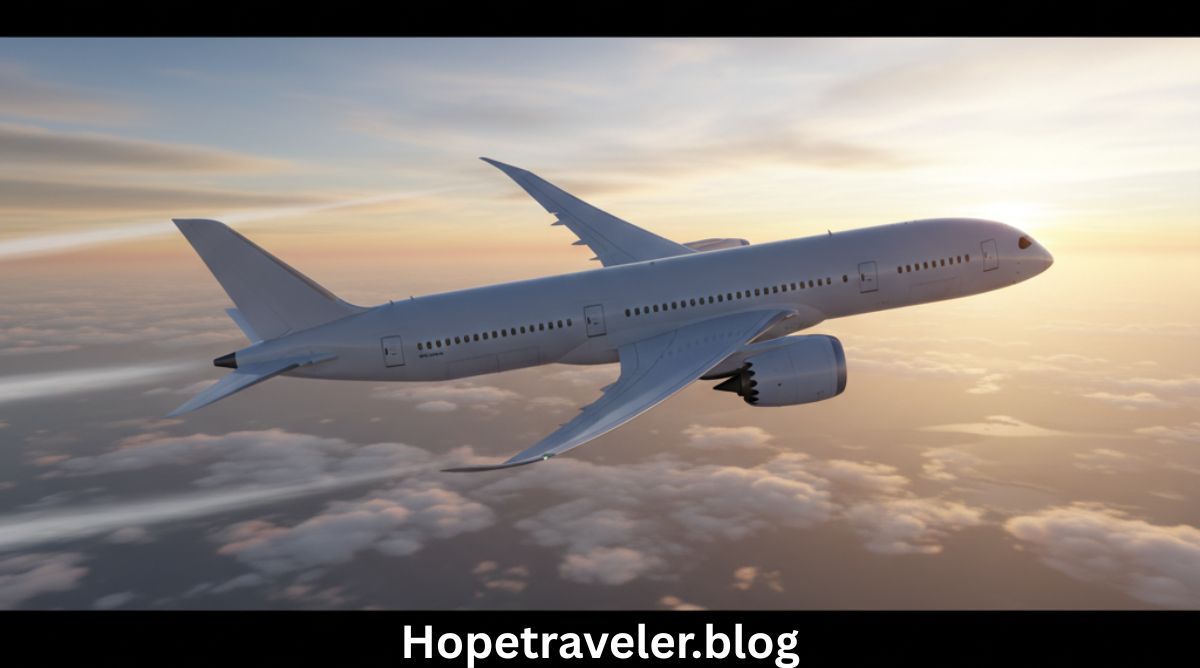
Air travel has revolutionized the way humans move around the world. From early propeller-driven aircraft to today’s supersonic jets, the speed of planes has always fascinated people. One of the most common questions asked by curious travelers and aviation enthusiasts alike is — how fast does a plane travel?
The answer depends on several factors: the type of aircraft, its engine design, altitude, purpose (commercial, military, or private), and even atmospheric conditions. In this comprehensive article, we’ll explore how fast different kinds of planes travel, what affects their speeds, and some incredible records in aviation history.
Understanding Airspeed: The Basics
Before diving into specific aircraft speeds, it’s essential to understand what “speed” means in aviation. Pilots use several measurements to describe how fast an aircraft is moving through the air or over the ground.
According to Airspeed definitions on Wikipedia, these are the main types:
- Indicated Airspeed (IAS): What the pilot sees on the cockpit’s airspeed indicator; not corrected for air pressure or temperature.
- True Airspeed (TAS): The actual speed of the aircraft relative to the surrounding air mass, corrected for altitude and temperature.
- Ground Speed: How fast the plane moves relative to the ground; affected by wind. If a plane flies into a headwind, its ground speed decreases.
- Mach Number: The ratio of the aircraft’s speed to the speed of sound (Mach 1). For example, Mach 2 means twice the speed of sound.
Factors That Affect How Fast a Plane Travels
Several factors influence how fast an airplane can travel. Here are the most important ones:
1. Engine Type
The engine design largely determines an aircraft’s top speed.
- Piston engines (found in propeller aircraft) are slower.
- Turboprop engines use jet turbines to drive propellers — faster than pistons but slower than jets.
- Jet engines are the fastest, capable of supersonic speeds.
2. Aircraft Weight and Design
A lightweight, aerodynamic design enables higher speeds with less drag. For example, fighter jets are slim and pointed, while commercial airliners are broader and optimized for fuel efficiency rather than speed.
3. Altitude
Planes generally fly faster at higher altitudes due to thinner air, which reduces drag. For instance, most commercial jets cruise between 30,000 and 40,000 feet where they can achieve optimal speed and fuel economy.
4. Wind and Weather Conditions
Wind has a big impact on ground speed. A strong tailwind can boost a plane’s speed, while a headwind slows it down. That’s why flight times vary depending on direction — for example, flying from New York to London is faster than the return trip due to prevailing winds.
How Fast Do Different Types of Planes Travel?
Now, let’s break down how fast different types of aircraft typically travel under normal conditions.
1. Propeller Planes (General Aviation Aircraft)
These are smaller, slower planes used for personal flying, training, or short regional routes. Examples include the Cessna 172 and Piper PA-28.
- Average Speed: 120–200 mph (193–322 km/h)
- Maximum Speed: ~250 mph (402 km/h)
Propeller planes are ideal for short distances and sightseeing flights because of their low operating costs and simplicity.
For reference, you can read more about Cessna 172 — one of the most popular general aviation aircraft in history.
2. Turboprop Planes
Turboprop aircraft combine jet turbine engines with propellers. They’re faster than piston planes and are often used for regional flights.
Examples: ATR 72, Bombardier Dash 8, and Saab 340.
- Average Speed: 300–400 mph (480–640 km/h)
- Cruising Altitude: ~25,000 feet
Turboprops are more fuel-efficient than jets for short-haul flights, which is why many regional airlines rely on them.
3. Commercial Jetliners
Modern commercial jets, such as the Boeing 737, Airbus A320, and Boeing 787 Dreamliner, dominate passenger air travel.
- Cruising Speed: 500–600 mph (800–965 km/h)
- Typical Altitude: 35,000–40,000 feet
For instance, a Boeing 737 travels around 530 mph (853 km/h), while a Boeing 787 cruises near 560 mph (900 km/h).
The world’s largest passenger jet, the Airbus A380, has a top speed of about 634 mph (1,020 km/h).
You can explore more details about this aircraft on the Airbus A380 Wikipedia page.
4. Supersonic Aircraft
Supersonic planes fly faster than the speed of sound — Mach 1, which equals roughly 767 mph (1,235 km/h) at sea level.
The most famous supersonic passenger plane ever built was the Concorde, capable of speeds up to Mach 2.04 (about 1,354 mph or 2,180 km/h). It could travel from New York to London in just 3.5 hours, compared to the usual 7-hour flight.
Military jets such as the F-15 Eagle and F-22 Raptor can easily exceed Mach 2, reaching speeds above 1,500 mph (2,414 km/h).
You can read more about supersonic flight on the Supersonic speed Wikipedia page.
5. Hypersonic Aircraft
Hypersonic flight refers to speeds above Mach 5 — five times the speed of sound. While no commercial aircraft currently operates at such speeds, experimental planes and military projects are exploring this technology.
For example:
- NASA X-15: Reached Mach 6.7 (4,520 mph / 7,274 km/h) — still the record for fastest manned aircraft.
- Boeing X-51 Waverider: An unmanned hypersonic craft that reached Mach 5.1 in testing.
More about this technology can be found on the Hypersonic speed Wikipedia page.
How Fast Does a Plane Travel During Different Flight Phases?
A plane doesn’t travel at the same speed throughout the entire flight. Here’s how it typically varies:
- Takeoff: 150–200 mph (240–320 km/h)
- Climb: 250–350 mph (400–560 km/h)
- Cruise: 500–600 mph (800–965 km/h) for jetliners
- Descent: 250–350 mph (400–560 km/h)
- Landing: 130–160 mph (210–257 km/h)
Pilots adjust speed based on air traffic control instructions, weather, and airport conditions.
The Speed of Sound and Mach Number
To better understand supersonic flight, we need to consider the speed of sound, also known as Mach 1.
The speed of sound varies with air temperature and altitude. At sea level, it’s around 767 mph (1,235 km/h), but at higher altitudes, it’s slower due to colder air.
When a plane travels faster than the speed of sound, it breaks the sound barrier, creating a loud sonic boom. This phenomenon is described in detail on the Sonic boom Wikipedia page.
The Fastest Planes in the World
Here are some of the fastest aircraft ever built:
| Aircraft | Top Speed | Mach Number | Type |
|---|---|---|---|
| NASA X-15 | 4,520 mph (7,274 km/h) | Mach 6.7 | Experimental rocket plane |
| Lockheed SR-71 Blackbird | 2,193 mph (3,530 km/h) | Mach 3.3 | Reconnaissance jet |
| Concorde | 1,354 mph (2,180 km/h) | Mach 2.04 | Passenger jet |
| MiG-25 Foxbat | 2,170 mph (3,490 km/h) | Mach 3.2 | Military jet |
| Boeing 747 | 614 mph (988 km/h) | Mach 0.9 | Commercial jetliner |
The Lockheed SR-71 Blackbird, used by the U.S. Air Force, remains one of the most iconic high-speed aircraft, capable of cruising at Mach 3 without breaking apart due to heat.
Learn more about this aircraft on the Lockheed SR-71 Blackbird Wikipedia page.
Future of Air Travel Speed
While today’s commercial jets have largely plateaued in speed due to fuel efficiency and noise restrictions, the future looks promising.
Companies like Boom Supersonic and NASA are working on next-generation supersonic and hypersonic passenger jets. These could reduce transatlantic flight times to under 3 hours while being quieter and more sustainable.
Electric and hybrid aircraft, on the other hand, may focus more on environmental impact than on speed, offering slower but cleaner alternatives.
Conclusion
So, how fast does a plane travel?
It depends on the type of plane:
- Small propeller planes: 120–250 mph
- Turboprops: 300–400 mph
- Commercial jets: 500–600 mph
- Supersonic aircraft: 1,200–2,200 mph
- Hypersonic test planes: 4,000+ mph
While speed remains a fascinating aspect of aviation, most modern airlines balance speed with efficiency, safety, and environmental sustainability. From the early days of the Wright brothers to the futuristic designs being tested today, the evolution of flight speed is a testament to human innovation.