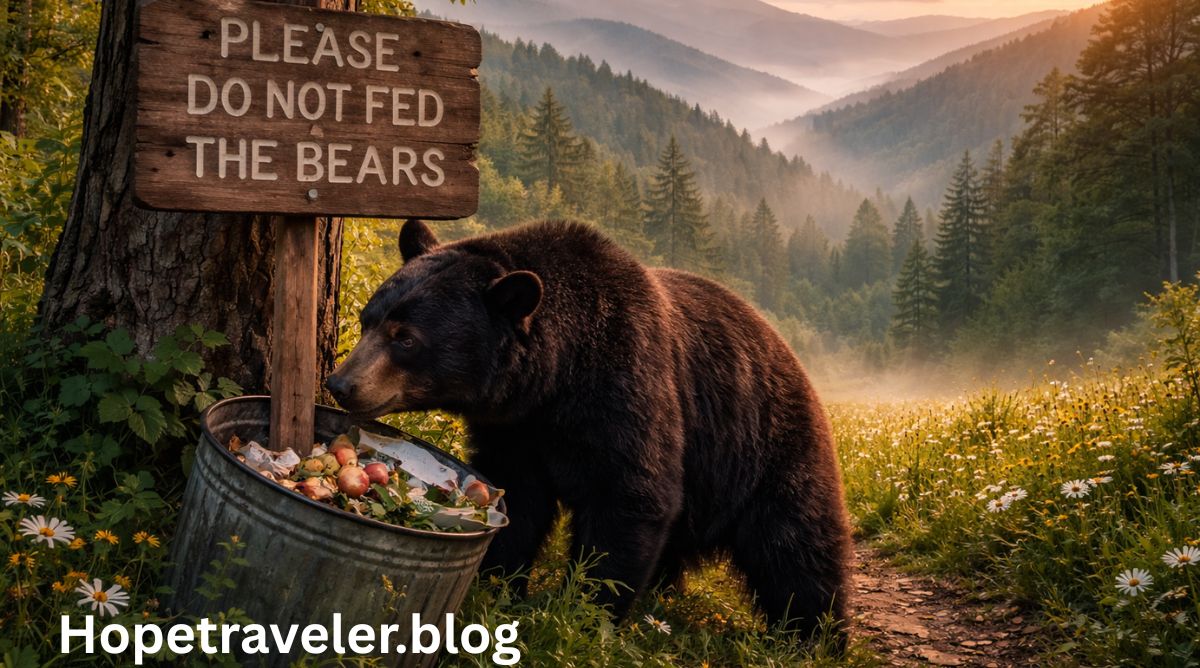
The Great Smoky Mountains National Park, straddling the border between North Carolina and Tennessee, is home to one of the most dense populations of American black bears in the world. With an estimated 1,900 bears inhabiting the park—roughly two bears per square mile—the interaction between humans and wildlife is a constant and delicate balance. Central to the management of these creatures is the strict prohibition of providing them with human food. A smoky mountains bear feeding citation is not merely a bureaucratic fine; it is a critical enforcement tool used by the National Park Service (NPS) to prevent a chain of events that often leads to the death of the animal and the endangerment of park visitors. As of 2026, law enforcement rangers have intensified their vigilance, viewing the act of feeding bears as a serious federal offense that carries significant legal and ecological consequences.
The Legal Framework of Wildlife Protection
The authority to issue a smoky mountains bear feeding citation is grounded in federal law, specifically under Title 36 of the Code of Federal Regulations (CFR), Section 2.2. This regulation explicitly prohibits the feeding, touching, teasing, frightening, or intentional disturbing of wildlife. In the Great Smoky Mountains, these rules are strictly enforced to maintain the wild nature of the park’s inhabitants. When a visitor is caught providing food to a bear—whether by hand-feeding, leaving food out on a picnic table, or improperly disposing of trash—they are in direct violation of federal law.
The penalties for receiving such a citation are severe. A person found guilty of feeding wildlife in the park can face a fine of up to $5,000 and the possibility of up to six months in a federal prison. These citations are handled through the federal court system, and the records of such violations can remain on an individual’s background indefinitely. The severity of the punishment reflects the NPS’s stance that human interference in the natural diet of a bear is a form of animal cruelty and a public safety hazard.
The Ecological Impact of Human Food Conditioning
The primary reason for the issuance of a smoky mountains bear feeding citation is to prevent “food conditioning.” Bears are highly intelligent animals with an incredible sense of smell and a memory for easy food sources. When a bear receives food from a human, even once, it begins to associate people with a high-calorie, effortless meal. This association fundamentally alters the bear’s natural behavior and instincts.
Once a bear becomes food-conditioned, it loses its natural fear of humans. This is a dangerous transition. A bear that is not afraid of people is more likely to enter campgrounds, approach vehicles, and even break into cars or tents in search of the food it has been taught to expect. These “nuisance” bears often stop foraging for their natural diet of nuts, berries, and insects, instead spending their time in developed areas. This puts them at a significantly higher risk of being hit by vehicles, which is one of the leading causes of bear mortality in the Smokies.
Public Safety and the Escalation of Aggression
From a management perspective, a bear that has been fed is a “beggar bear,” and beggar bears eventually become aggressive. When a food-conditioned bear approaches a human and does not receive food, it may exhibit assertive behaviors to demand a meal. This can include huffing, popping its jaws, or performing “bluff charges.” In extreme cases, these interactions can lead to physical contact, resulting in serious injuries or death for the visitor.
Park rangers are often forced to take drastic measures when a bear becomes a persistent threat to public safety due to human feeding. Initially, a bear might be trapped and relocated to a remote area of the park. However, bears are highly territorial and possess a strong homing instinct; they frequently return to the site where they were originally fed. If a bear continues to seek out human food and shows aggressive tendencies, the NPS policy is often euthanasia. This is the tragic reality behind the phrase “a fed bear is a dead bear.” The citation issued to a visitor is an attempt to break this cycle before a bear has to be destroyed.
Proper Food Storage and Prevention Strategies
Preventing the need for a smoky mountains bear feeding citation begins with education and proper equipment. The park provides bear-proof trash cans and dumpsters in all picnic areas and campgrounds. Visitors are required to store all food, coolers, and scented items (including toothpaste and deodorant) inside a locked, hard-sided vehicle when not in use. In backcountry areas, hikers must use the designated bear cable systems to hang their packs and food bags at least 10 feet off the ground.
Intentional feeding is not the only way to earn a citation. “Incidental feeding”—the act of leaving a site messy or failing to secure a cooler—is also a citable offense. Rangers frequently patrol campgrounds and picnic spots to ensure compliance. If a ranger finds food left unattended on a table, they will often issue a citation to the registered camper, regardless of whether a bear has actually found the food yet. The goal is to ensure that the bear never has the opportunity to find human food in the first place.
The Role of Law Enforcement and Recent Trends
In 2025 and 2026, the Great Smoky Mountains National Park has seen an uptick in visitors attempting to get “selfies” or close-up footage of bears, often using food as bait to lure the animals closer. This trend has led to an increase in the number of citations issued at popular overlooks and roadside pull-offs. Law enforcement rangers use various methods to catch violators, including plainclothes patrols and citizen reports.
The public is encouraged to report any instances of wildlife feeding to park authorities immediately. When a visitor reports someone feeding a bear, it allows rangers to intervene quickly, potentially saving the bear’s life and preventing a dangerous situation for subsequent visitors. These reports often lead to the successful issuance of a smoky mountains bear feeding citation, serving as a deterrent to others who might consider breaking the law for a photograph.
Cultural Misconceptions and Education Efforts
Many people who feed bears do so out of a misplaced sense of compassion, believing that the animals are hungry or in need of help. This is a significant misconception that the NPS works hard to correct. Black bears in the Smokies are remarkably resilient and well-adapted to their environment. Even in years when natural food sources like acorns (mast) are scarce, bears are capable of finding alternative natural foods or entering a state of lethargy to conserve energy.
The educational programs in the park emphasize that feeding a bear is not an act of kindness; it is an act of destruction. Through ranger-led talks, signage, and social media campaigns, the park message is clear: respect wildlife by keeping your distance. Current regulations require visitors to stay at least 50 yards (150 feet) away from bears at all times. Violating this distance requirement can also result in a citation, as it disrupts the animal’s natural behavior and increases the risk of a defensive attack.
The Economic and Operational Costs of Bear Management
Beyond the biological impact, the illegal feeding of bears creates a significant economic burden on the park. Managing nuisance bears requires thousands of man-hours and thousands of dollars in equipment every year. When a bear must be tracked, trapped, sedated, and relocated, it involves specialized wildlife biologists and law enforcement teams.
If a bear is euthanized, it is a loss of a valuable natural resource that takes years to replace within the ecosystem. The legal processing of a smoky mountains bear feeding citation also consumes resources within the federal court system. By enforcing these laws strictly, the NPS aims to reduce these costs and redirect funds toward habitat restoration and trail maintenance. The fines collected from citations do not just penalize the offender; they serve as a reminder of the high price of disregarding wildlife regulations.
Global Context and Comparisons
The issue of feeding bears is not unique to the Smoky Mountains; it is a challenge faced by national parks across North America, from Yosemite to Yellowstone. However, the high density of both bears and humans in the Smokies makes the situation particularly acute. Lessons learned in the Smokies often inform management practices in other parks. The use of the “Bear Wise” program—a regional initiative that teaches residents and visitors how to coexist with bears—originated in part due to the high conflict rates in the Appalachian region.
In 2026, the Smokies continue to lead the way in integrated bear management. The combination of strict law enforcement (the citation), infrastructure (bear-proof bins), and public outreach has proven to be the most effective way to keep bears wild and people safe. The goal is to reach a point where the issuance of a smoky mountains bear feeding citation becomes a rare event, indicating that the public has fully embraced the responsibility of visiting a wild landscape.
Conclusion
The Great Smoky Mountains National Park is a sanctuary for the American black bear, but its status as a refuge depends entirely on human behavior. A smoky mountains bear feeding citation is the final line of defense in a strategy designed to protect the lives of both bears and humans. When a visitor ignores the warnings and provides food to a bear, they are not just breaking a rule; they are signing a death warrant for the animal and creating a hazard for every visitor who follows them.
Preserving the wildness of the Smokies requires a collective commitment to the principle of “Leave No Trace.” This includes the absolute refusal to feed or approach wildlife. By respecting the laws and understanding the devastating consequences of food conditioning, we can ensure that future generations will still have the opportunity to see black bears roaming freely in the mist-covered mountains of the South. The message from the park rangers is simple and unwavering: Keep your food secure, keep your distance, and help keep the bears wild. Through education and the necessary enforcement of citations, the Great Smoky Mountains National Park remains a place where nature is respected, and the wild remains wild.